- Parking available
- Bus stop available
- Free admission
Leitmar
Various Attractions
The village of Leitmar bears a water-related name of great antiquity, as the place name “Letmere” was formed from the Germanic root word *mari*, meaning “spring, marsh, or standing water.”
Leitmar is first mentioned around 1120 as “villa Letmere,” a donation by a nobleman named Bernhard to the Benedictine Abbey of Helmarshausen (Kassel district).
Leitmar is first mentioned around 1120 as “villa Letmere,” a donation by a nobleman named Bernhard to the Benedictine Abbey of Helmarshausen (Kassel district).


Address
Leitmar
Flessinghauser Straße
34431 Marsberg
Telephone: +49 2992 / 3388
Properties:
In the mid-14th century, the Bredelar Monastery in Leitmar also owned estates. In 1348, the Lords of Brobecke ceded their estates both within and outside the village of Leitmar to the Bredelar Monastery. Corvey Abbey was also considered a landowner in Leitmar during the 14th century. Its estates likely included the farms and tithes held by the von Horhusen and von Dodinghausen families. In 1450, the von Brobecke family sold their rights to Leitmar to the Bredelar Monastery. In the 14th and 15th centuries, the majority of the village passed to the House of Canstein. In the years that followed, the village was frequently the source of disputes between Canstein and Waldeck, which persisted especially during the 15th century.
The Cansteins temporarily pledged their holdings in Leitmar—then known as Lethmere—to Bredelar Abbey. The Count of Waldeck redeemed them from the monastery; he had already purchased the rights of Friedrich Raben as a partial acquisition in 1444. In that year, the Raben family of Canstein ceded Leitmar as a fief to Waldeck. As early as 1491, the Waldecks returned it. In 1503–06, Leitmar was contractually part of the Canstein domain, an almost independent domain with full jurisdiction—including capital punishment—which also included Canstein, Udorf, Heddinghausen, and Borntosten. Since 1550, the village, along with Canstein and various other settlements, has belonged to the Marsberg district. A deed of reversion indicates, however, that Waldeck continued to retain property in Leitmar, which was held in fief by the von Canstein and von Spiegel families.
Leitmar, too, appears not to have been spared the wave of village abandonment toward the end of the Middle Ages. In 1490, the village was described as deserted; however, it can be assumed that resettlement took place as early as the beginning of the 16th century.
The Leitmar Folk Dance Group was founded in October 1984. This initiative was spearheaded by Pastor Udo Scholz, who sought to strengthen youth programs in his new parish. Twenty-two young people from across the parish gathered for their first rehearsal at the Leitmar school. During the first two years, the focus was primarily on rehearsing the first dances and designing a beautiful traditional costume. It wasn’t until 1986 that the group made its first appearance at the senior citizens’ afternoon in Leitmar. That same year also saw the first folk dance festival in the Schützenhalle.
The festival’s great success and the friendships formed with other groups as a result meant that the folk dance festival became a fixture on the parish’s calendar in the years that followed. While the guest groups in the early years came from the immediate vicinity, dancers from many regions of Germany and other European countries soon began to enrich the folk dance festivals. In turn, it was always a great pleasure for Leitmar to be a guest itself—for example, our performances in Belarus, Spain, Austria, and Hungary were special highlights in the club’s history.
The Leitmar Support Association was founded in 2004 following the dissolution of the Leitmar Sports Club. It gradually took on more and more responsibilities in and around village life, such as serving as the patron for events like the annual May Festival. The association also supports projects and clubs in the village with manpower and financial resources.
The operational unit of the Leitmar Volunteer Fire Department consists of men and women between the ages of 18 and 60 who are on call 365 days and nights a year to ensure the safety of the community. In addition to firefighting operations, the fire department’s scope of operations includes all types of technical rescue. To this end, the firefighters continually undergo theoretical and practical training, not only during practice evenings but also through specialized courses. In addition to the operational unit, the Leitmar Volunteer Fire Department also includes the Senior and Honorary Division as well as the Youth Fire Brigade. The Youth Fire Brigade consists of boys and girls between the ages of 10 and 18, who learn firefighting Wissen during training evenings.
The “St. Sturmius Leitmar” Shooting Club was founded in 1924. That same year, the first shooting festival was held at innkeeper Josef Schröder’s “Gasthof zur Post.” The “St. Sturmius e.V. Leitmar” shooting club is a member of the Brilon District Shooting Association and the Sauerland Shooting Association.
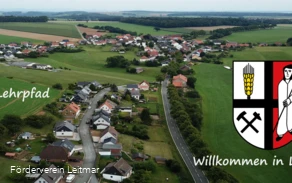
The 5-km circular “Rund um Leitmar” nature trail invites you to hike, explore, and discover. Follow in the footsteps of mining history and village development and learn fascinating stories, such as that of the first Christmas tree in the Marsberg area. With magnificent views of the Sauerland and Upland regions, the nature trail invites you to see the town and its natural surroundings in a whole new light. The loop trail delights with interesting facts and challenges visitors with an interactive on-site quiz. The QR codes, in particular, bring the information panels to life and allow you to review the information later. Alternatively, the text on all panels is available in audio format, so even the youngest hikers are sure to enjoy the experience.
Leitmar also features a shooting range. The facility is operated by the BDMP e.V. Schießsport-Center Marsberg.
Directions
Bus route from Marsberg Train Station: 497 Marsberg Train Station is centrally located in the city center. In addition, there are approximately 1,000 free parking spaces available within a 500-meter radius of the Marsberg city center, including the Park & Ride lot on the street “An den Gleisen.” You can get to Marsberg… … by car: • A44 Dortmund–Kassel (Marsberg interchange, Lichtenau interchange) • B7 Chemnitz–Düsseldorf (direct connection) • A33 Paderborn–Osnabrück (about 30 minutes) • B252 Blomberg–Marburg (about 20 minutes) • A7 Kassel–Hanover (about 60 minutes) … by train (hourly service): • Dortmund-Sauerland-Express (Warburg–Dortmund) • Three stops in Marsberg: Bredelar, (Nieder-)Marsberg, Westheim • Direct connection to the IC/ICE stations in Warburg and Dortmund