As early as 800 A.D., settlers had already recognized the exceptional fertility of the limestone soil on the Suttrop Ridge, and the perennial springs at the edge of the limestone massif—which guaranteed a continuous water supply—prompted them to settle there.
In the past, small farming families drew the vital drinking water for people and animals from the springs at the foot of the ridge. Starting around 1900, the streams were increasingly piped and routed underground into the Wäster, before private initiatives led to the springs being uncovered again in 2012.
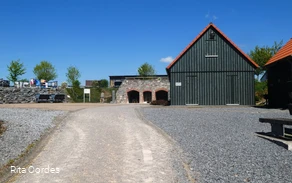
Consequently, the area where the Weber-Berres farm once stood was transformed into a gathering place; seating was installed, and flowers and shrubs were planted.
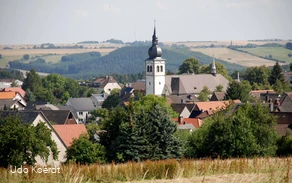
In Suttrop, you can still discover the long history of the neighborhood in its streetscape today. There are winding streets, small farmhouses, the historic half-timbered house “Haus Steinrücken,” and St. John’s Church to explore.